
Yves Scherer
It never rained

Swiss artist Yves Scherer (b. 1987, Solothurn, lives and works in New York) presents new paintings, sculptures, and lenticular works in his first exhibition at Eiklid / Rusten. Scherer’s practice moves between figuration and popular culture, weaving together personal narratives, fan fiction, and celebrity imagery. His immersive works open up a romantic perspective on identity, relationships, and everyday life.
INSTALLATION IMAGES
EXHIBITION TEXT
There is a sentiment of discomfort that often follows the presence of beauty. It tends to grow when the beautiful is accompanied by happiness, and even more so when it is omitted from concern. Like that saying, too good to be true, in which a reluctance to believe induces a scent of skepticism. What appears to be perfect only exists in a moment before it withdraws to the shadows of the eerie. In a nearly automated response, the idealized is often left to be mistrusted or placed in a utopia, at best. But what if one were to indulge in the perfect and trust merely a moment of the idealized as truth?
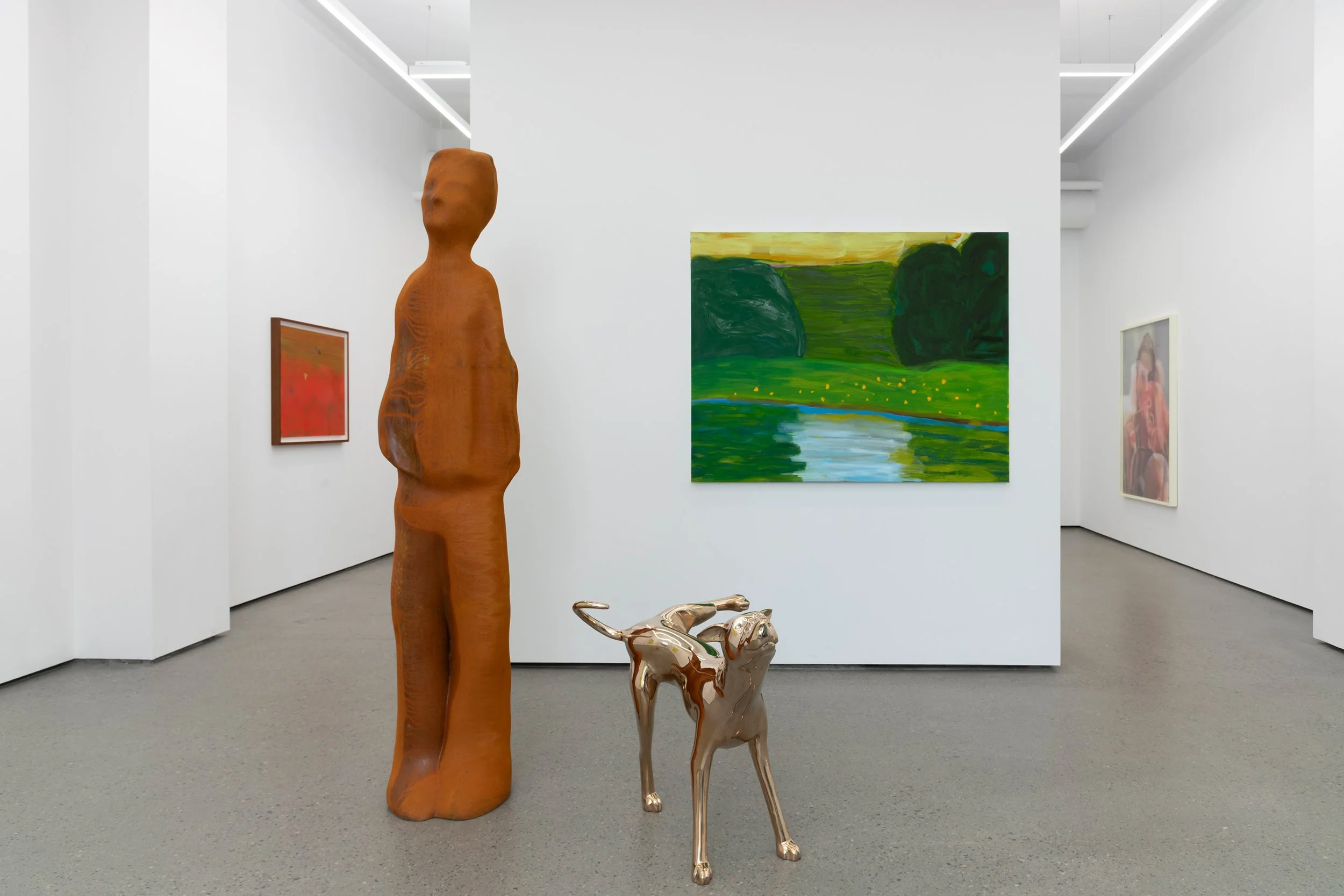
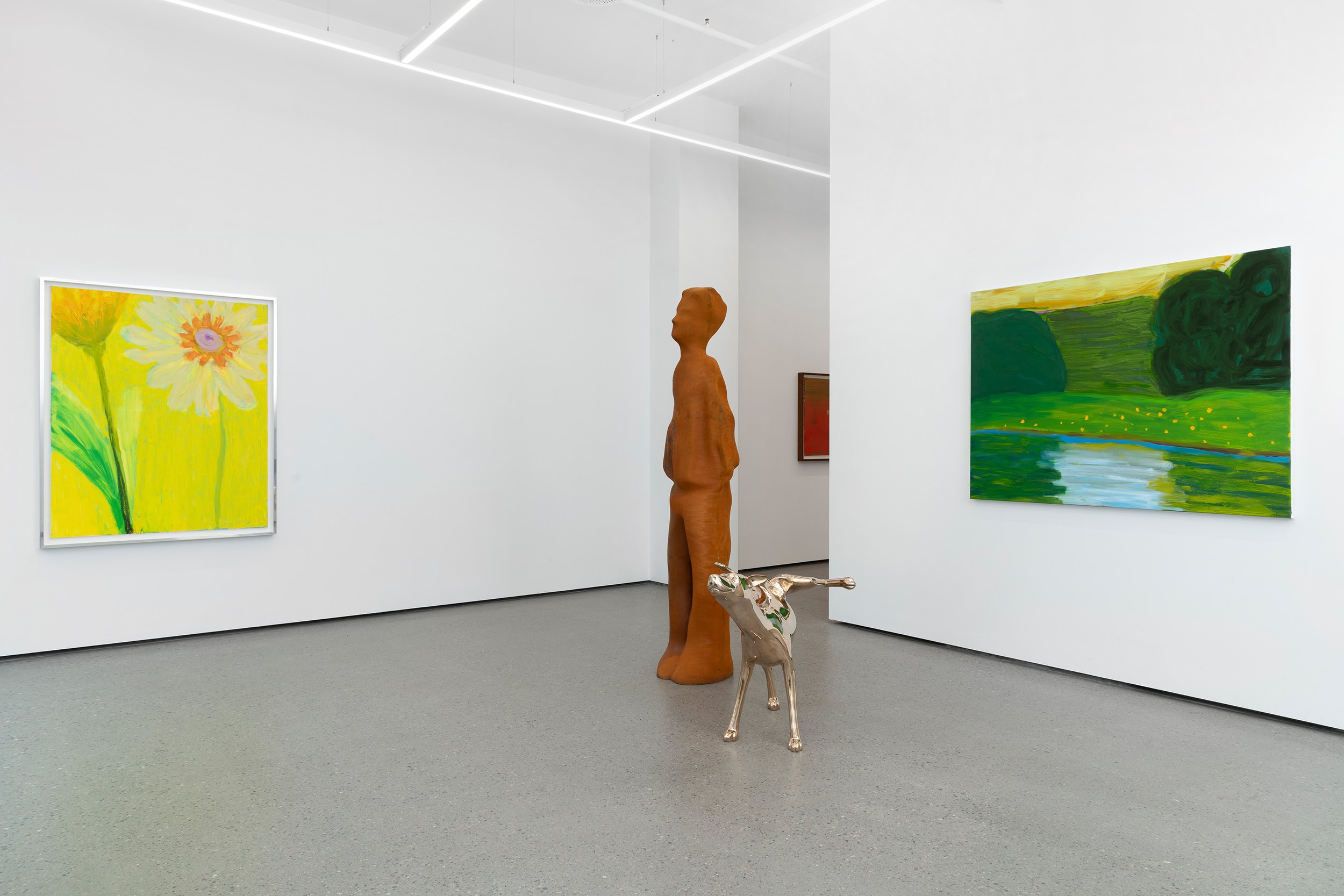
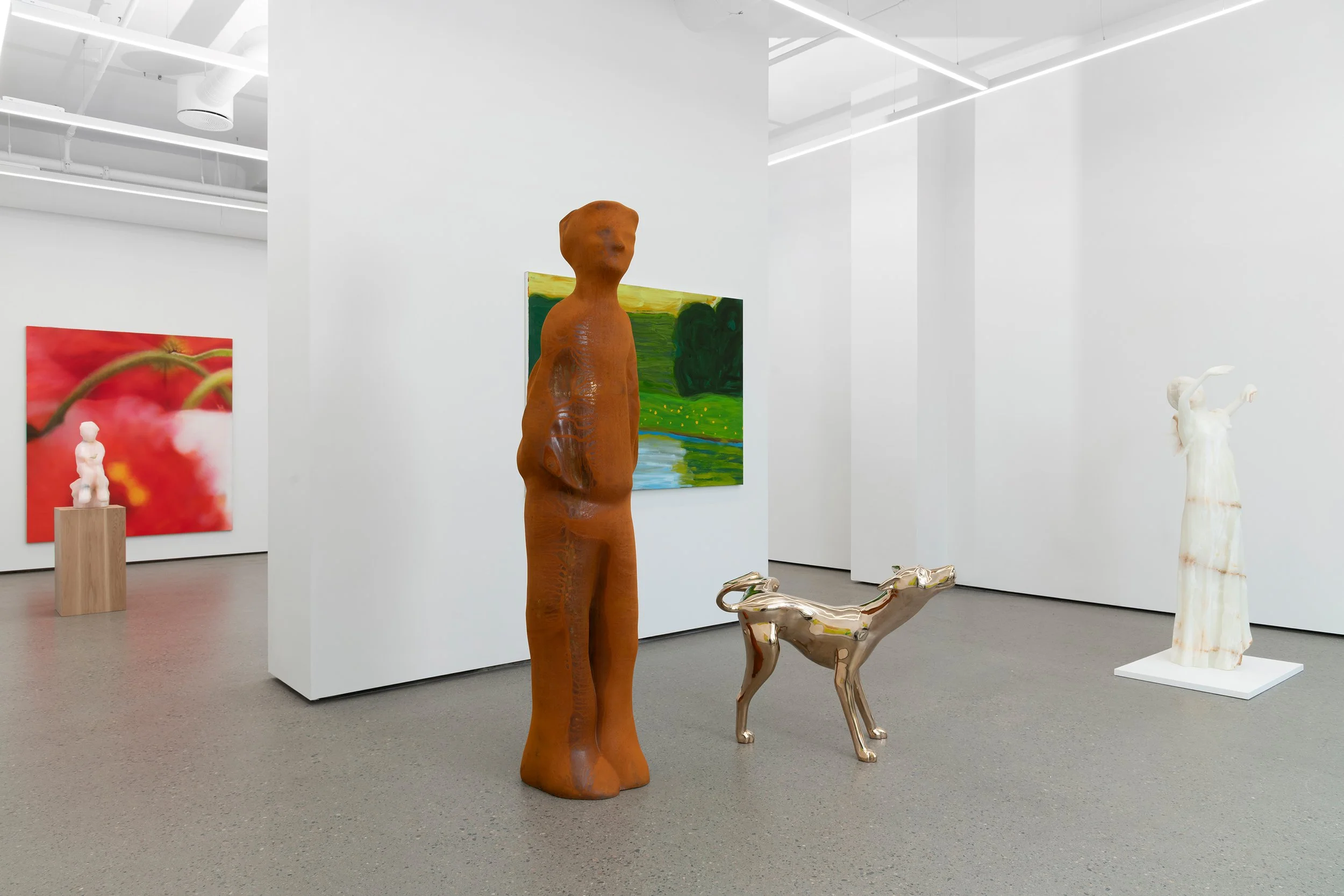
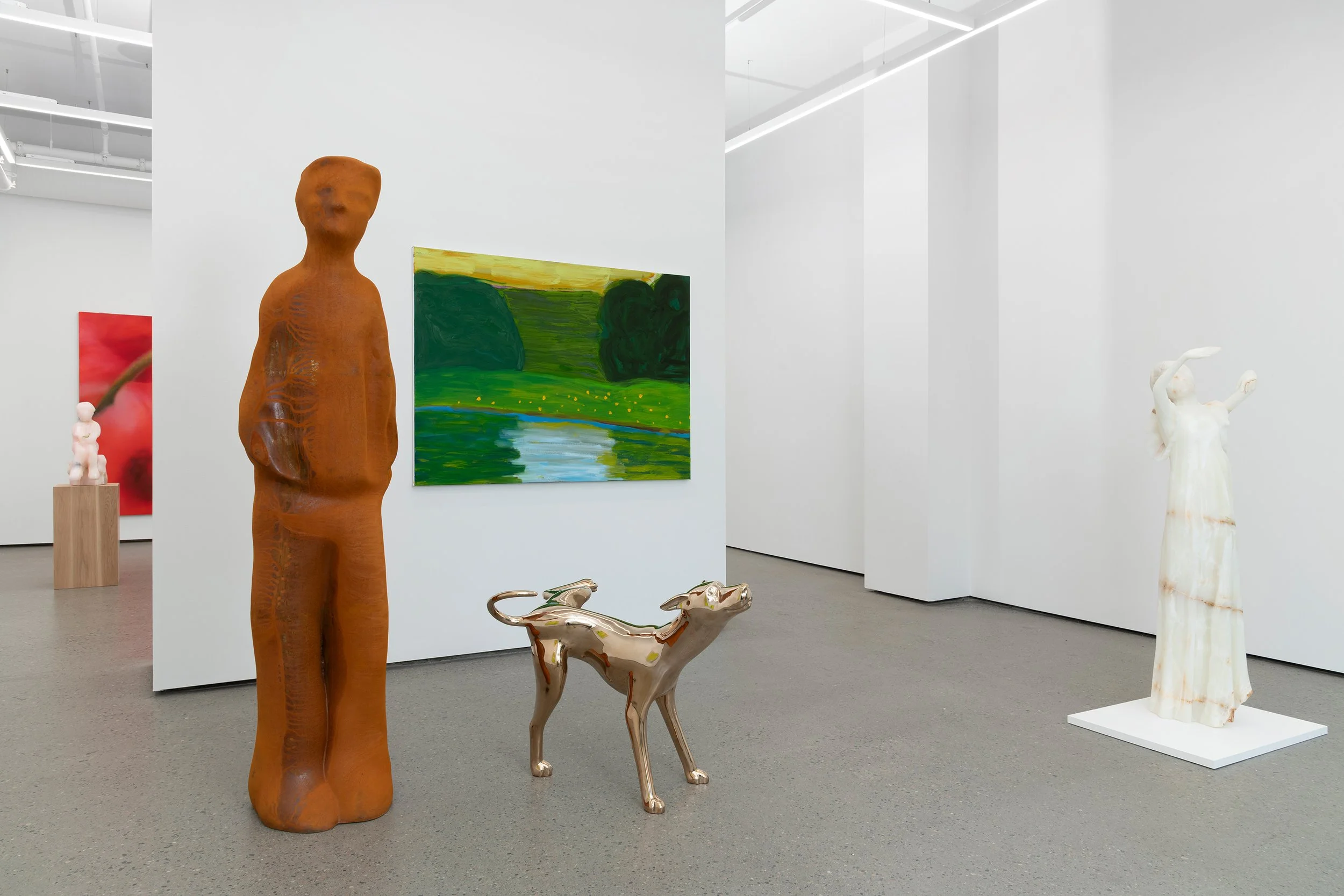
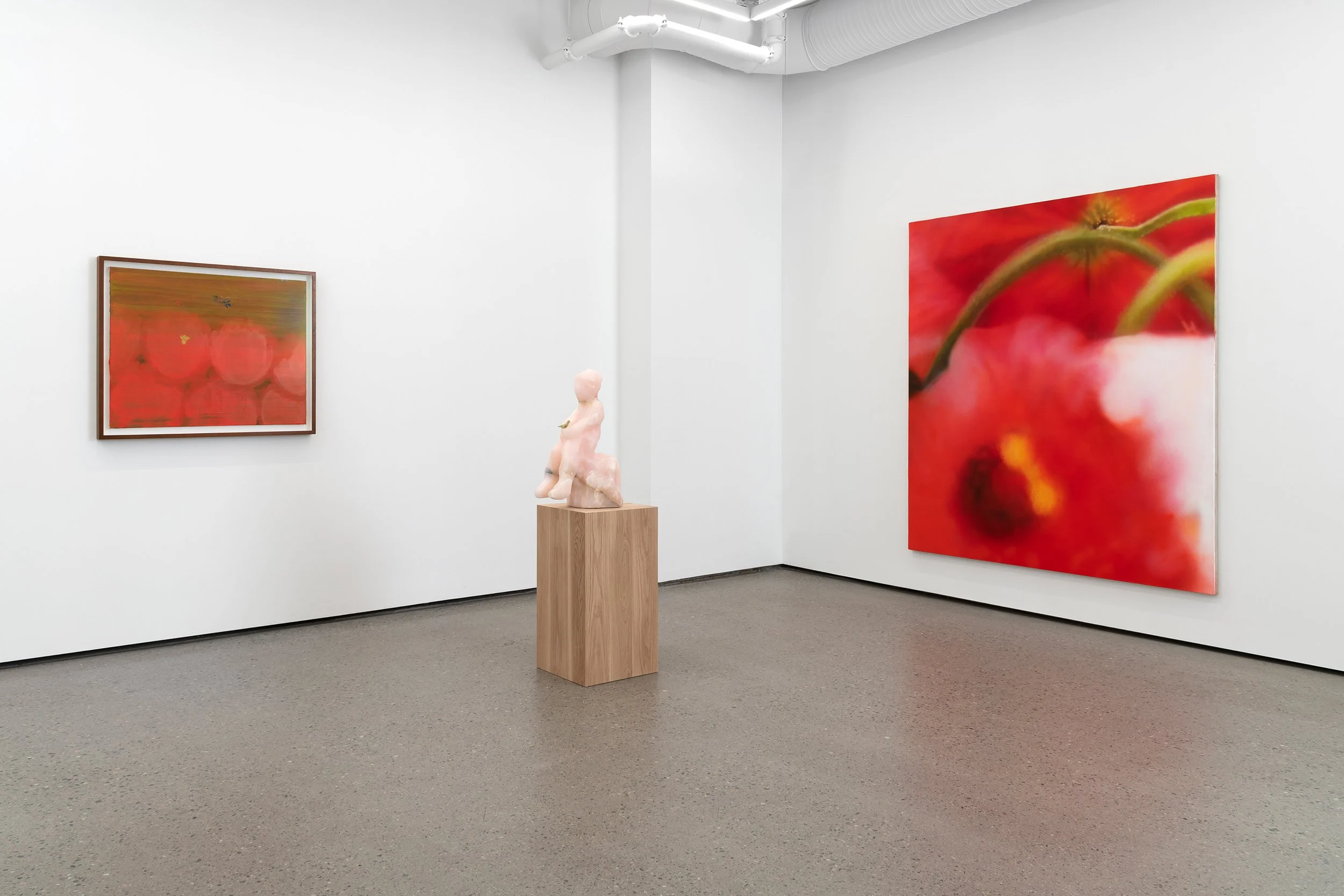
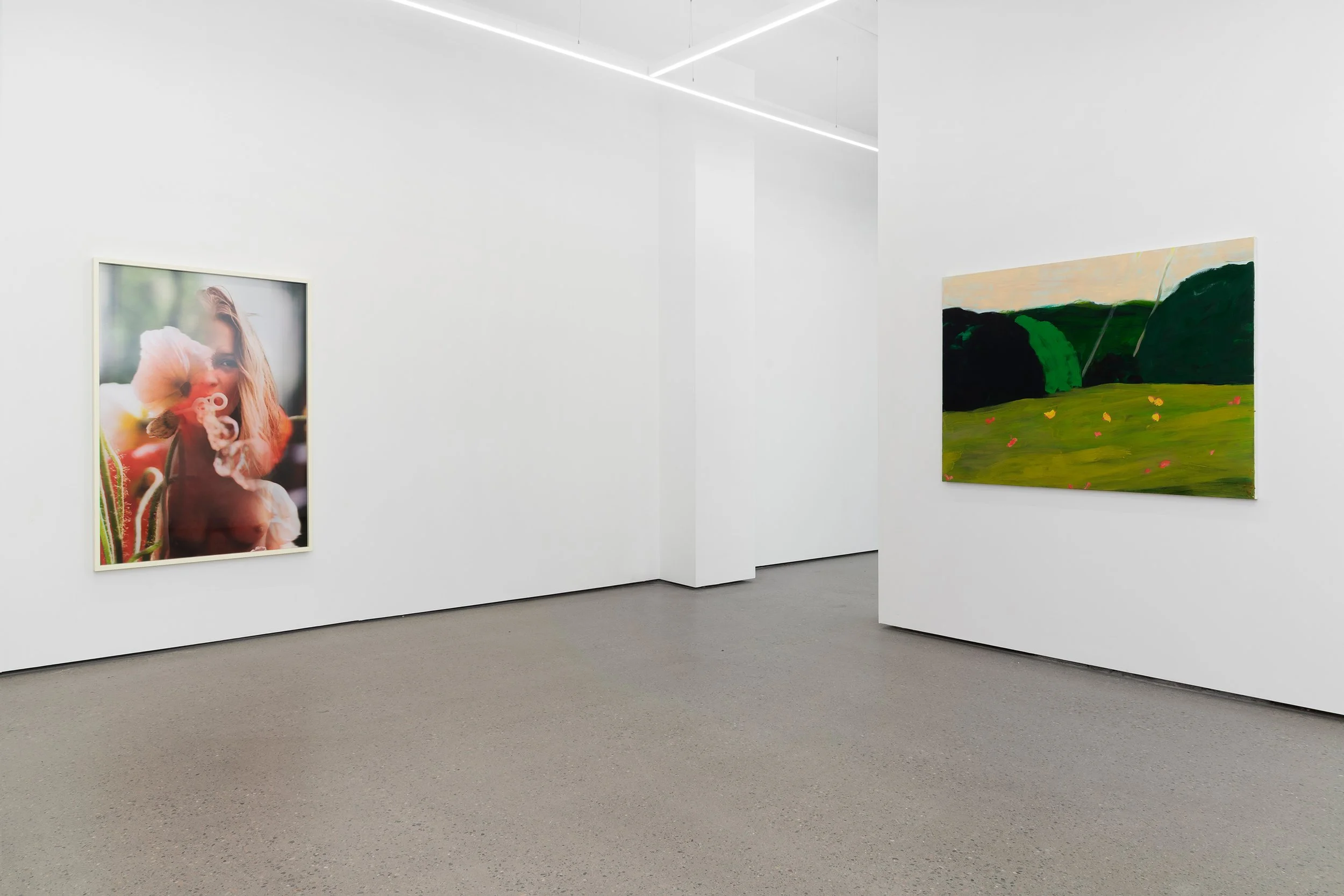
In the exhibition It Never Rained at Eiklid/Rusten, Yves Scherer presents a new series of works that shuffles the balance of such supposed doubt. Evoking a sense of calm, they propose something familiar, even friendly. As figures, forms, and expressions associated with fragmented narratives and cultural references, one is brought into a realm of joyful animals, idyllic landscapes, and dancing figurines, which compose a point of access. Looking at the painting, It Never Rained (2025), one can sense an open landscape in tones of green, yellow, and blue. On the brink of becoming abstract, the plane orientation of the brushstrokes and the implied motif convey a vision of a horizon. In the foreground, a pond, perhaps, and a meadow with small, dotted flowers. Around it, towering trees flank fertile ground as a yellow sky rises above. It seems to be an untroubled space, one that is both known and undefinable, calm in the company of its own elements.
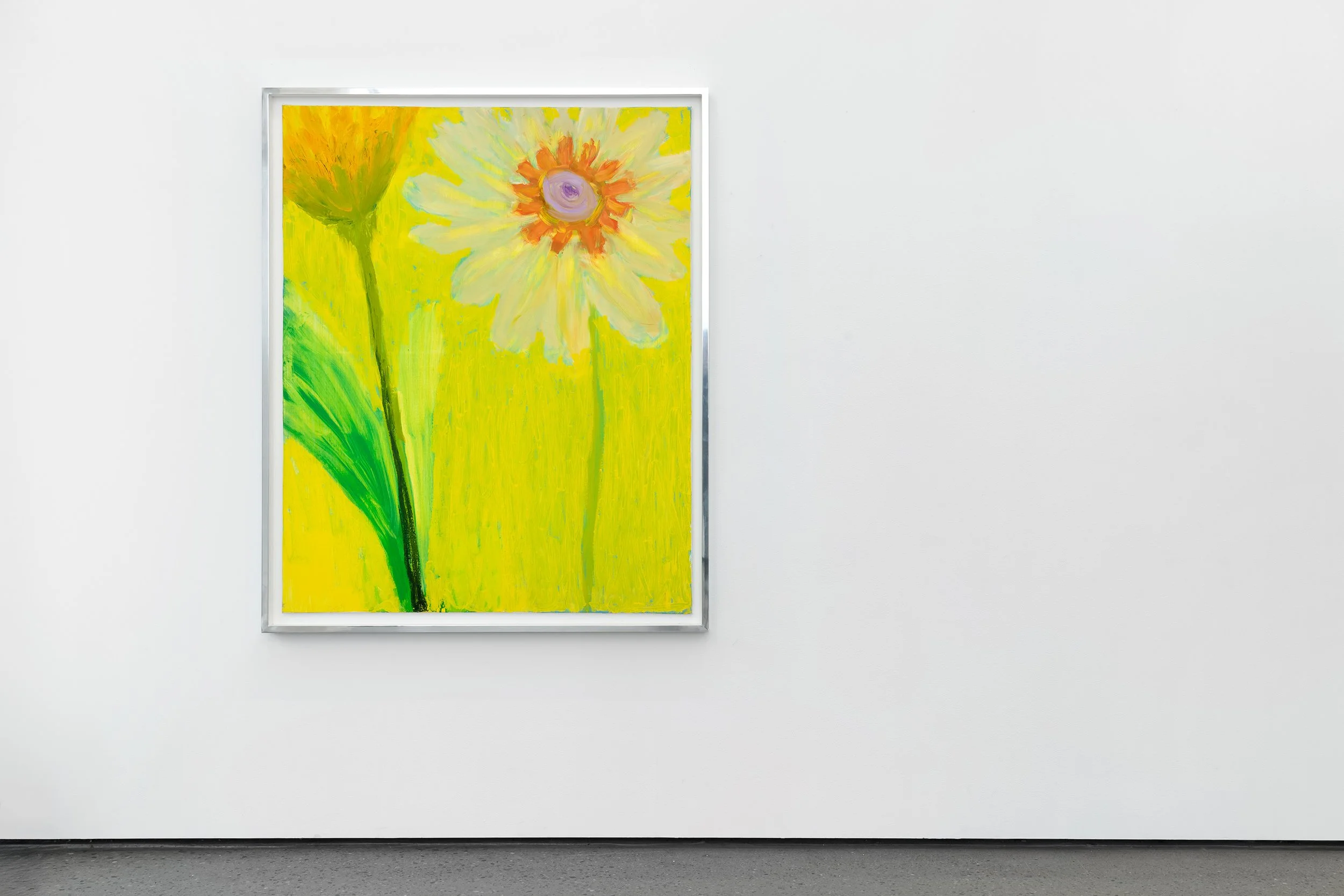
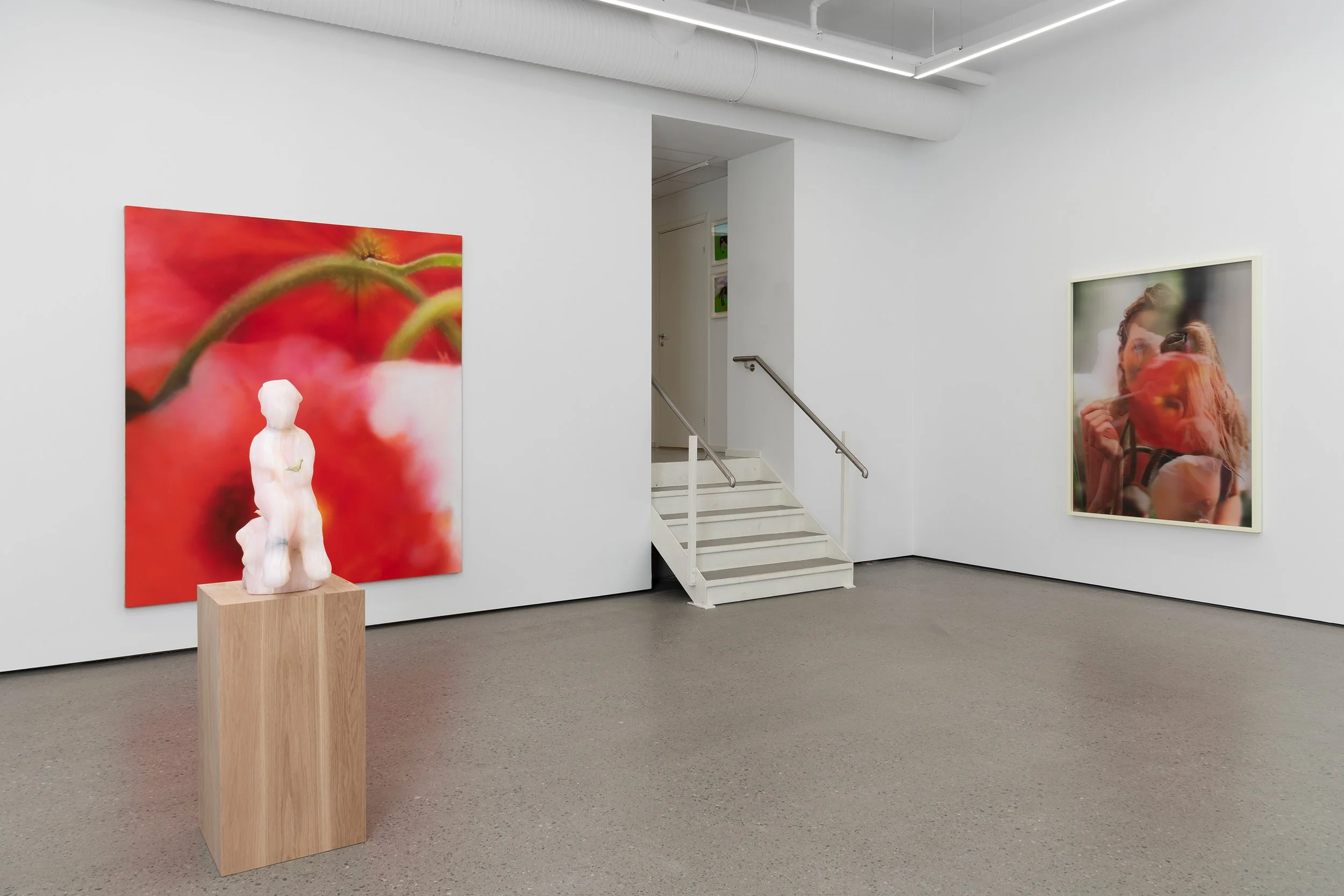
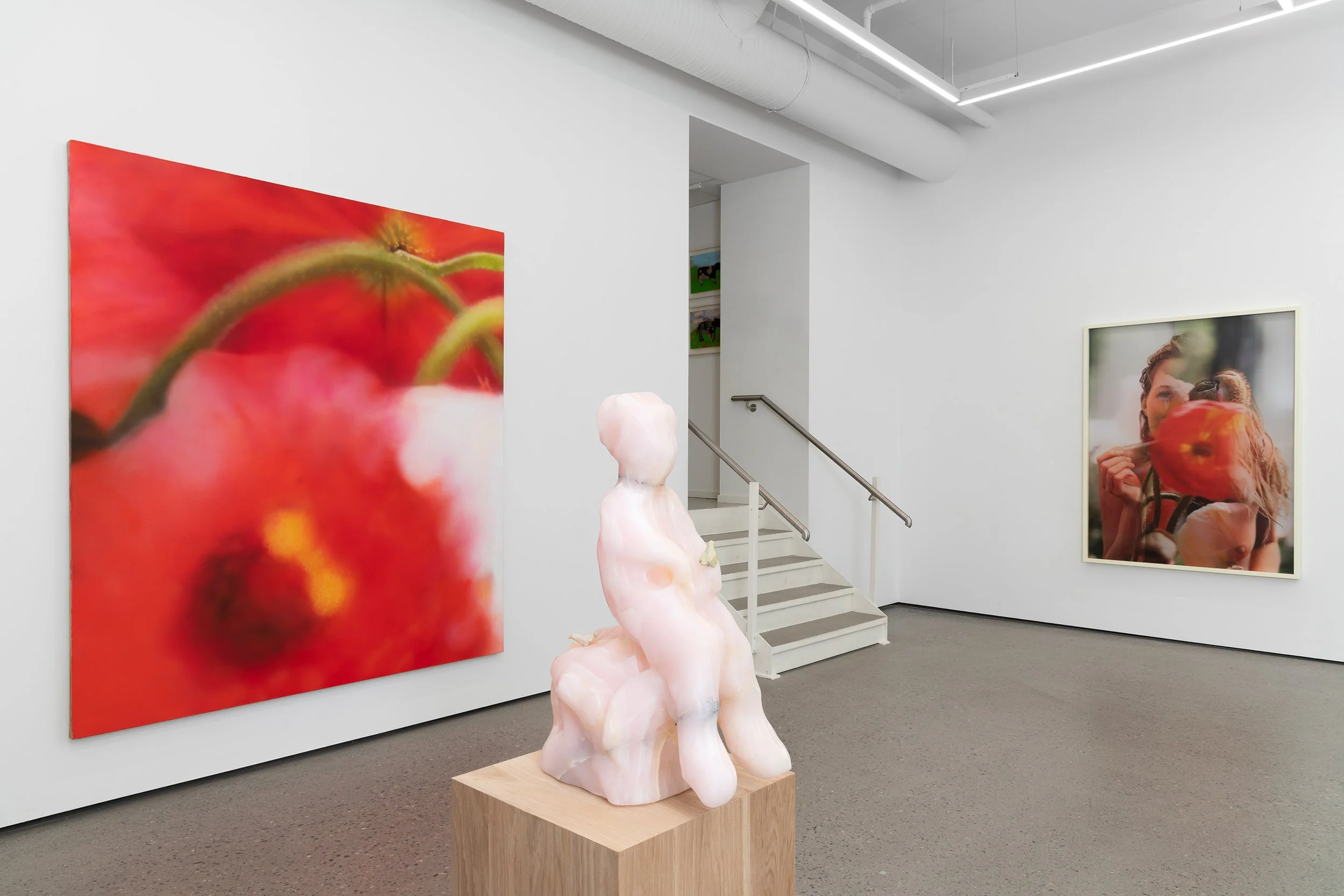
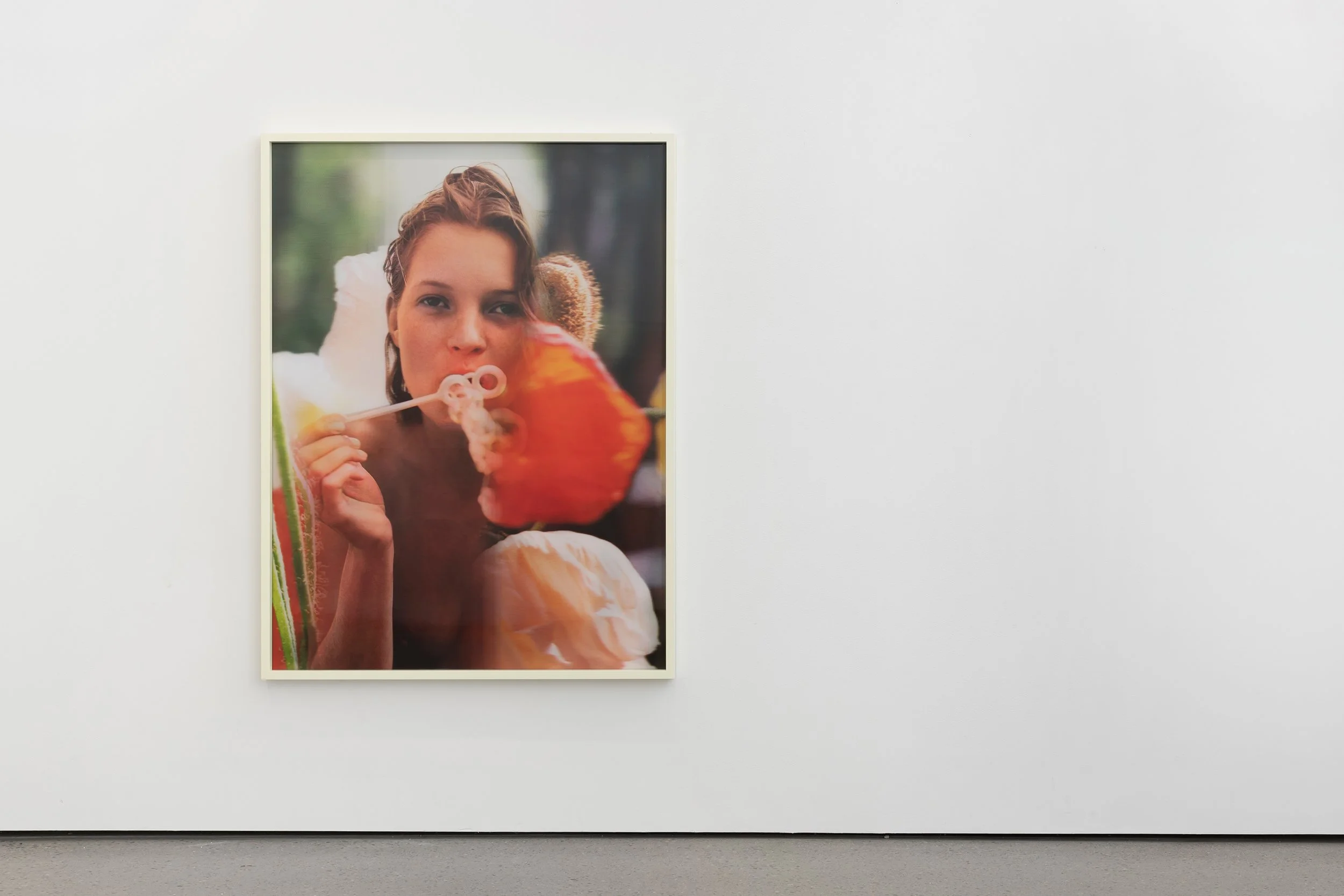
As one moves through the exhibition, one work begins to flicker. At first, locking eyes with a portrait of Kate Moss blowing bubbles. Then, walking past, her face is gone, replaced by a bundle of flowers. Created with a lenticular lens, the two images can exist within the same frame, allowing one to be visible in favor of the other, depending on the angle from which it is approached. Shifting back and forth, both are equally real, emphasizing the matter of perspective and its inherently relative nature.
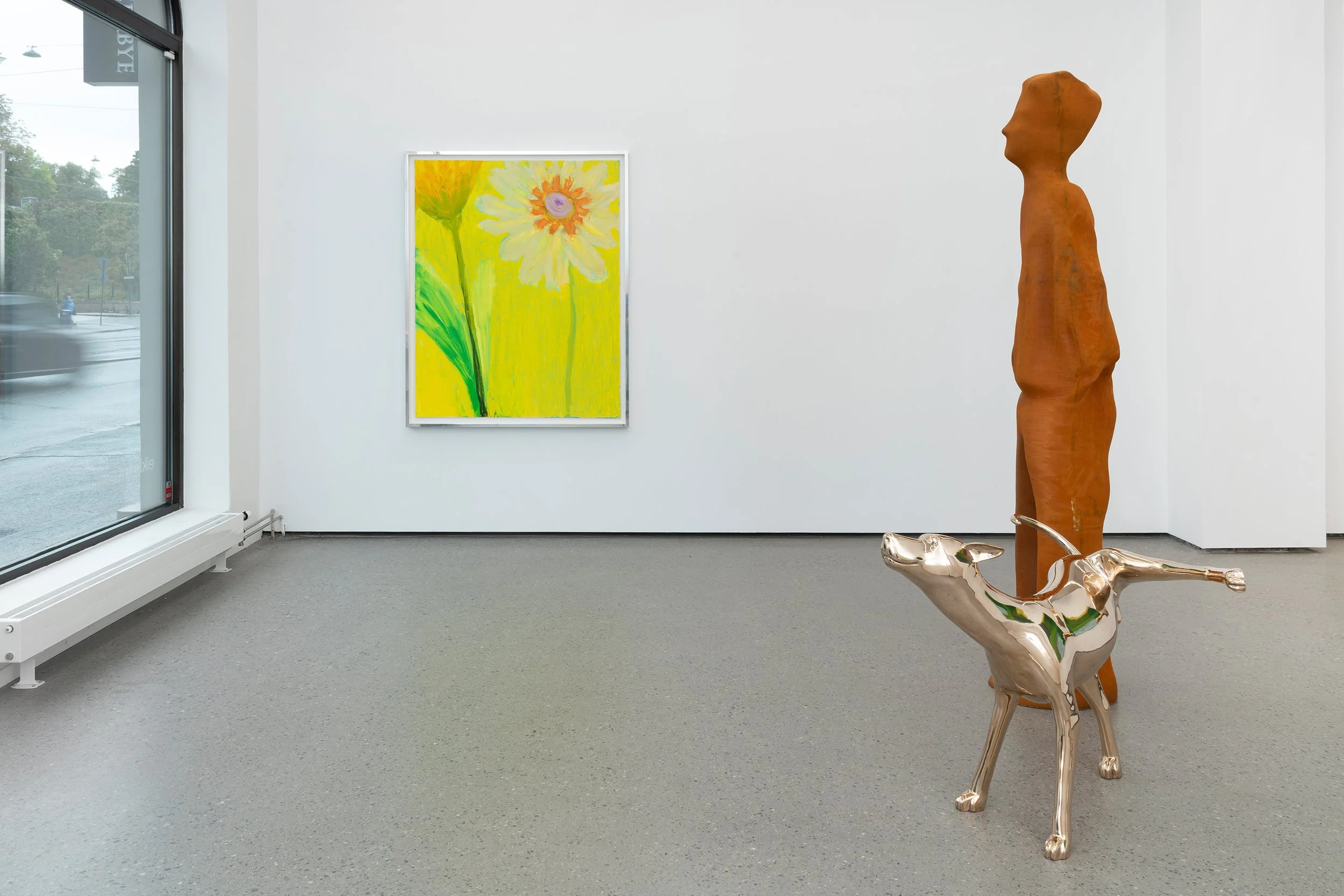
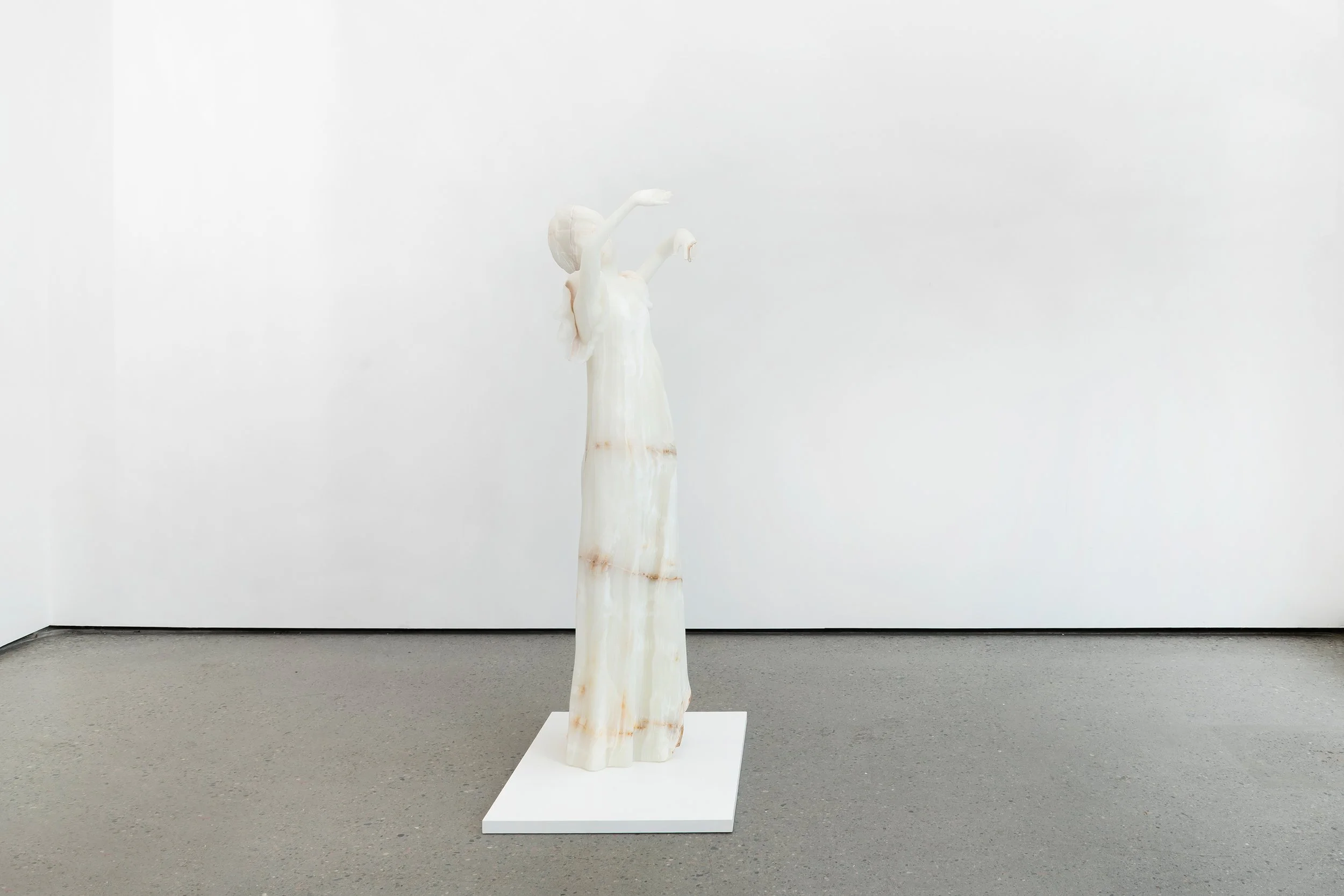
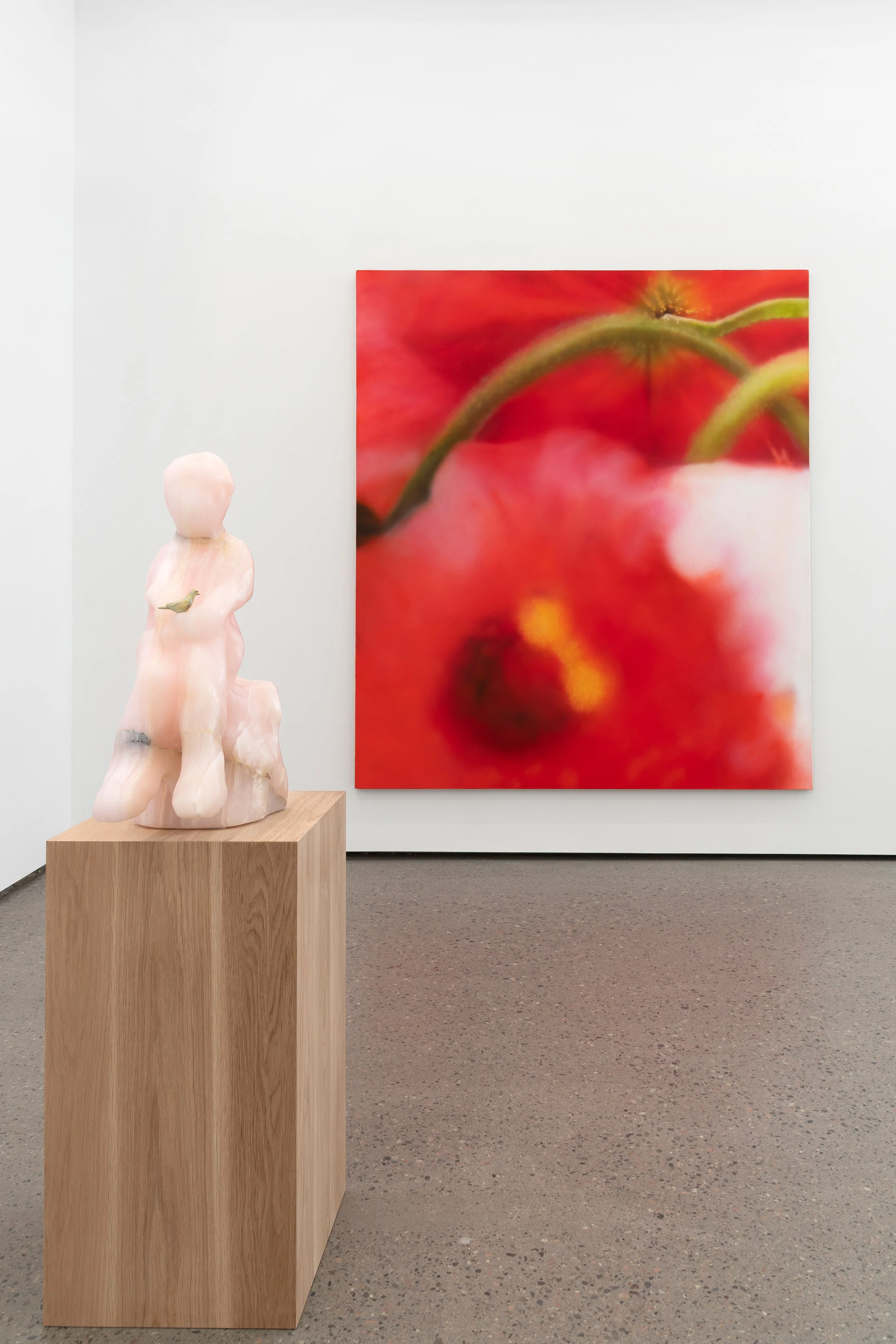
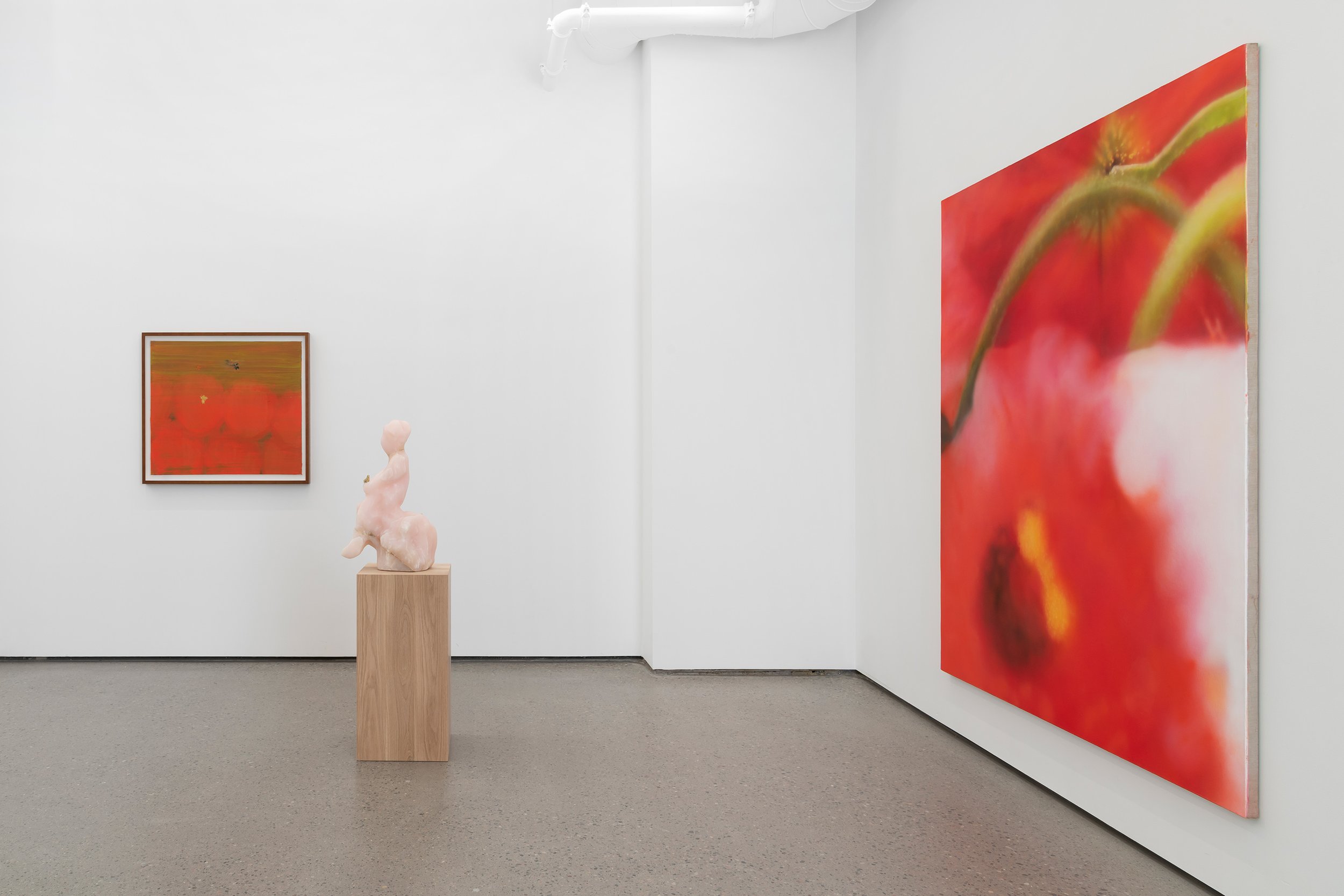
A polished, slick, golden life-sized sculpture of a dog in the round stands carefully balanced on its own feet. Lifting its back leg, urinating, with its head cheerfully lifted. The animal carries only a vague mimic, with no prominent eyes, gaze, or other element that details the depth of its expression. Yet, Doggie (2025) stands there, apparently joyful, in a moment of bliss. A similar sentiment can be found in further renderings of Scherer’s sculptures, such as A Summer Pastoral (2025), where a child holding a bird is seated on a large rock. Carefully shielding the bird with its hands, another has landed behind them, sharing the stone as a place to rest. Here, too, no details are carved to reveal the specifics of their expressions, with a face left blank and the beacons kept shut. The same can be derived from Daylight (2025), where a tall, slender female figure with lifted arms and a long, elegant gown is immersed in a dancer’s pose. Rendered in deliberation, she, too, is presented in an implied activity, yet is missing specific features of an identity or emotion. While the lenticular work depicting Kate Moss and the flowers is figurative and specific, the transformative stage through which the images switch places questions the moment of recognition and deprives the viewer of a sense of certainty.
Balancing on the verge between the specific and the general, the familiar and the anonymous, the personal and the collective, the works by Yves Scherer engage with an array of memories not bound to the mind of the individual but expanded in the circulation of shared experiences. A soothing landscape, a happy dog, a small child surrounded by birds, a dancing figure, the figures resonate with familiar scenes that transcend cultural borders and temporal definitions. Without bowing to a sentimental nostalgia, Scherer presents an insistence that protects the idealized from the skepticism of doubt. Pushing through the constructed barricade, which now could turn the conversation toward utopian dreams and a lost past, It Never Rained proposes another reality.
As Scherer moves back and forth between disciplines and traditions, the material and medial variations entail characteristics of their own. Where details, such as the faces of people and animals, are subdued, the tactile, visual, and structural qualities of the sculpture’s physical proportions or the painting’s optical poise gain an increased role in mediating evocative sentiments. In contrast to the shiny finish of the bronze in Doggie, a rougher structure leads the silhouette of the seated child. Cut from a piece of pink onyx, the abrupt movement of the form enhances the natural quality of the stone. In white, the two birds are glazed ceramic, creating subtle points of soft contrast against the monochrome continuity of the child and rock. Moving back toward Daylight, the materiality of stone is lighter in color but reveals dark veins that run along the surface of the figure’s dress.
Gathered in a joint space, each figure and depiction carries its own narrative through the material nature of its body and the form by which it is begotten. The veils muffling the details of their expressions do not become a limitation but rather an expansion of their reach. By keeping their essence through materiality and form, Scherer unlocks the confinement of the specific and releases them into a sphere where they adapt to their surroundings and the perception of the viewer. From a childhood pet to a cartoon character, the company of a loved one, or the expectation of another, the works compose a fluctuating foundation that calls upon elements of bliss and leaves the narrative open to unfold.
Like our memories, which alter ever so slightly every time they are retrieved, Scherer anchors the work in the familiar but not the absolute. While their physical form and means of expression are caught in a blur, they become morphing entities capable of delving in and out of various modes of recollection. Spun from a realm occupied by notions of beauty and comfort, they generate a terrain of saturated harmony. Spawned anew and again, these are not locked in a sentimental room of the past but actively generating a moment where memories arise, experiences occur, and future imagination takes place.
By recognizing, extracting, and repeating cultural tokens embodying happiness and beauty, Yves Scherer injects a perspective that prevails in the incentive of doubt. It Never Rains is no fairytale escapism or melancholic dream, but a reminder that while the world is burning, that which remains beautiful and joyous must be trusted and kept alive.
- Pernille Dybvig
PRESS
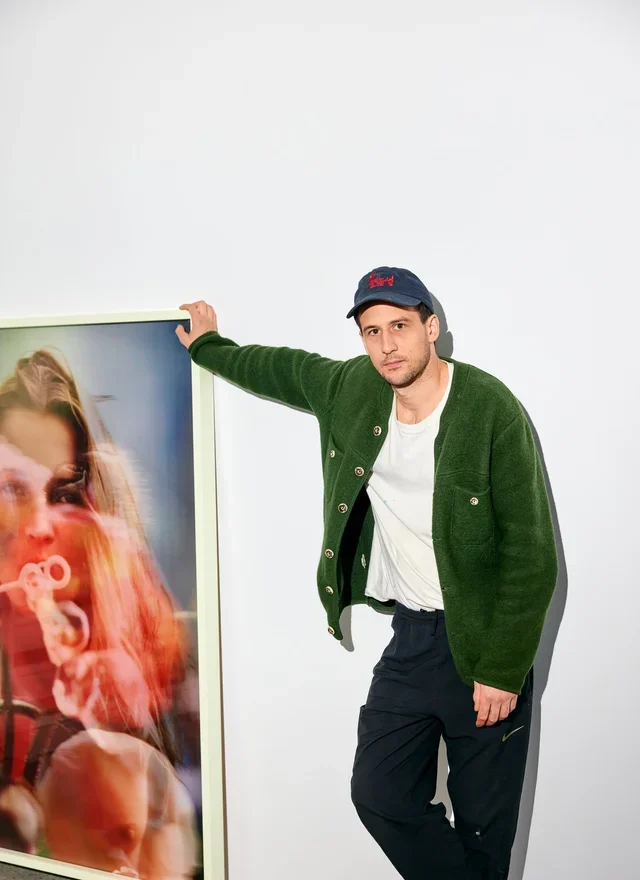
Interview with Yves Scherer in D2 (Norway’s version of HTSI). He talks about his life, art, family, and “It never rained”.
Link: Dagens Næringsliv, D2 (article in Norwegian)
Review of the show in Kunstavisen by Yngve Sikko
Link: Kunstavisen