
Christer Glein on his show and why fences
We spoke to Christer last week, towards the end of the show's run. By then the work had been on the walls for three weeks, with time for conversation, reflection, and a little distance from the decisions that went into making it. He was back in his studio in Stockholm.
Why fences? The fence is a constraint you gave yourself. When did it stop feeling like one?
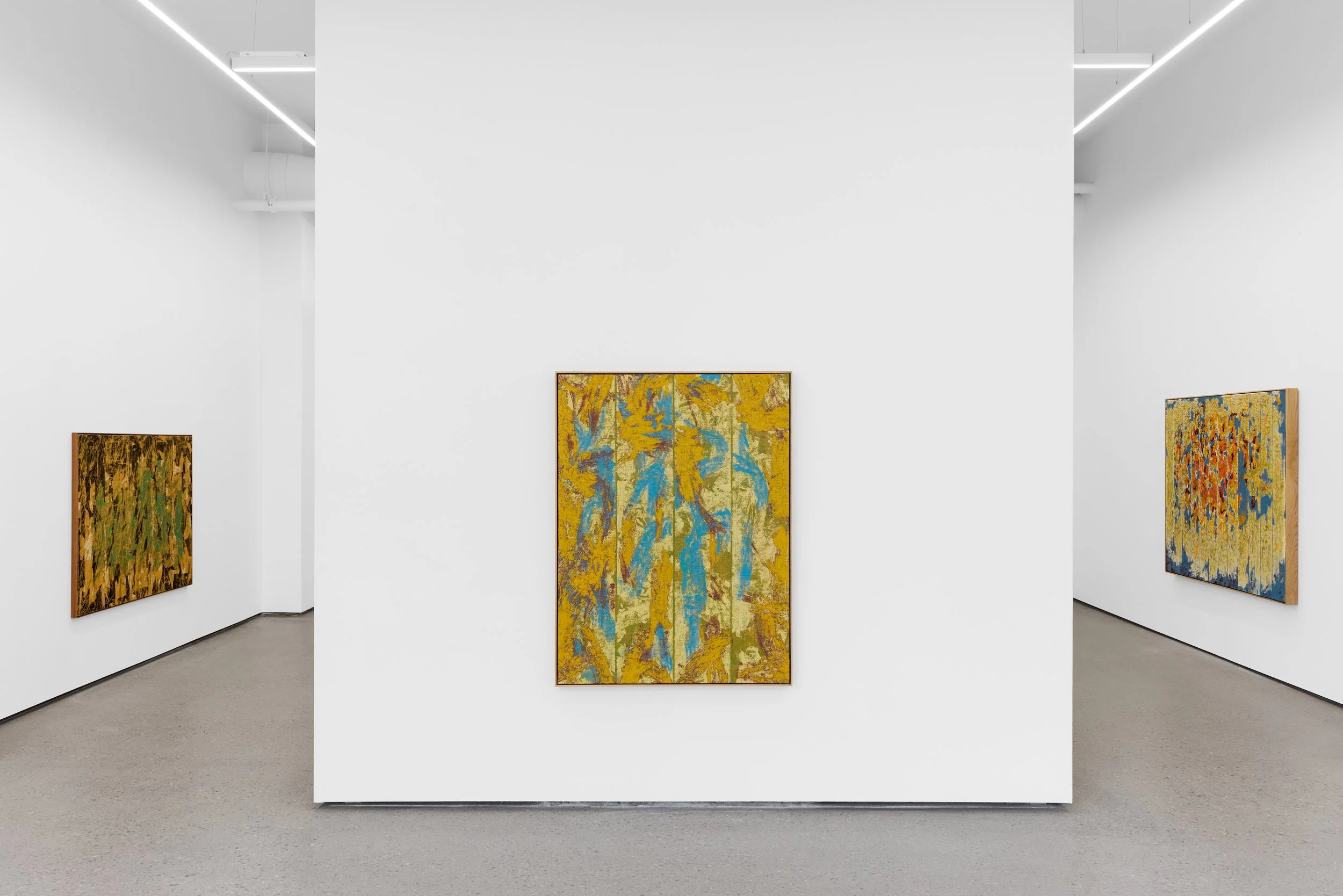
The fence provided a compositional system and a form of constraint that gave me both structure and limitation within the act of painting. An object that is inherently flat, retold on another illusionistically flat surface, resists immediate clarity or fixed meaning. And, in the words of Philip Guston: "Who wants to vanish into clarity or meaning?"
Coming from a history of painting figures, landscapes, and what I would describe as more of an image-world, the early process became a struggle not to turn the fence into an image. I gradually realised that it was the marks themselves -- the weight, rhythm, and impression of the barrier -- that moved the paintings forward. In the end, the solids and the gaps began competing for supremacy within the established hierarchy, and that felt more painterly than the image of a fence itself.
The paintings are made with oil and beeswax on linen or jute. What does the beeswax do that oil alone doesn't?
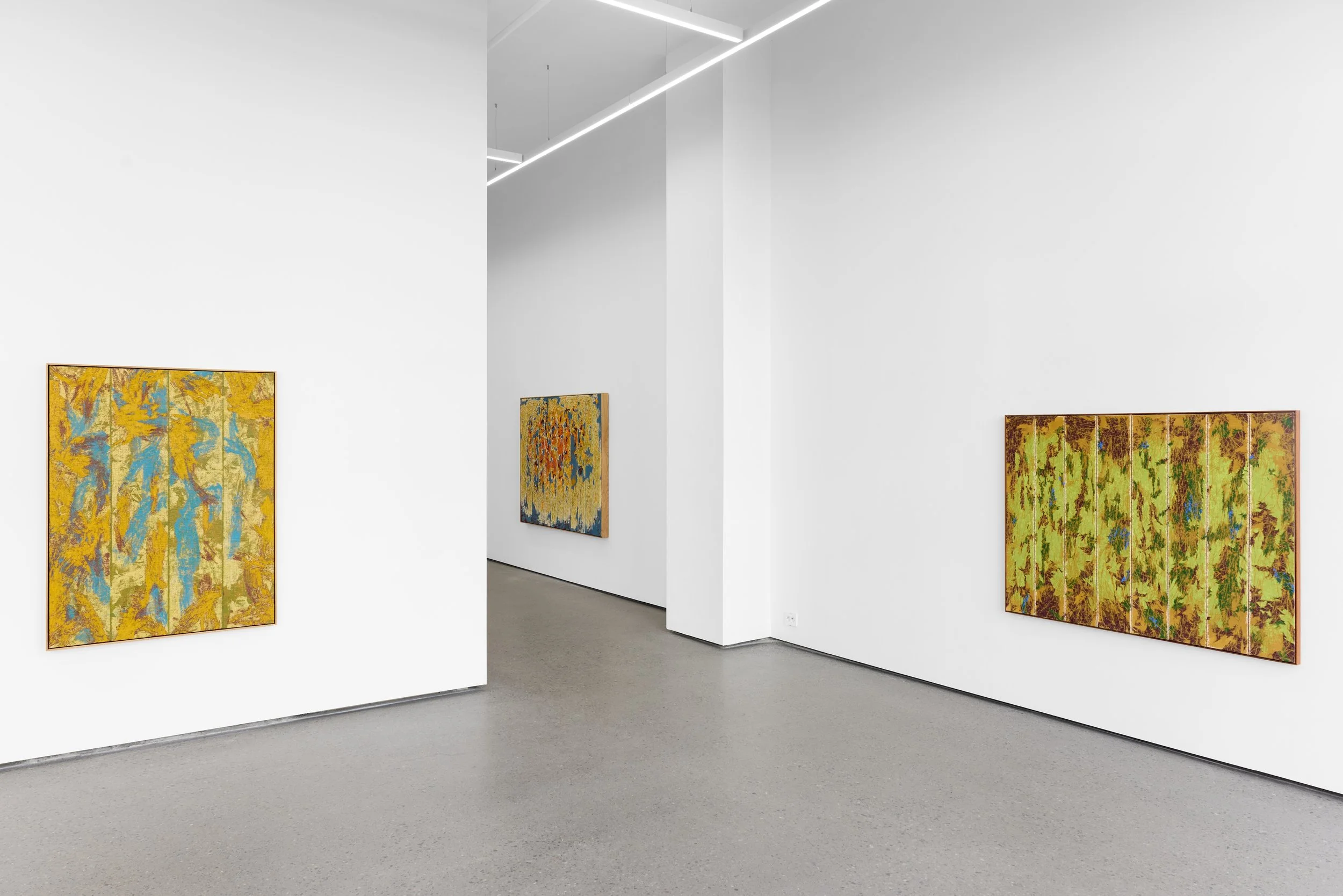
Beeswax gives the paint a transparent, matte quality. By removing gloss and glare, it creates depth through the cohesion of the surface and gives the painting a velvety appearance. The transparency also enhances the layering of colours, creating an almost glaze-like optical effect: the eye moves through layers of transparent colour toward the light ground beneath, before the light is reflected back again.
The different canvas types became a way of exploring layering through topography, especially the jute, which has a coarser weave than linen.
Every painting in the show is framed, but the frames vary. Some mahogany, some white painted, different depths. How are you thinking about the frame as part of the work?
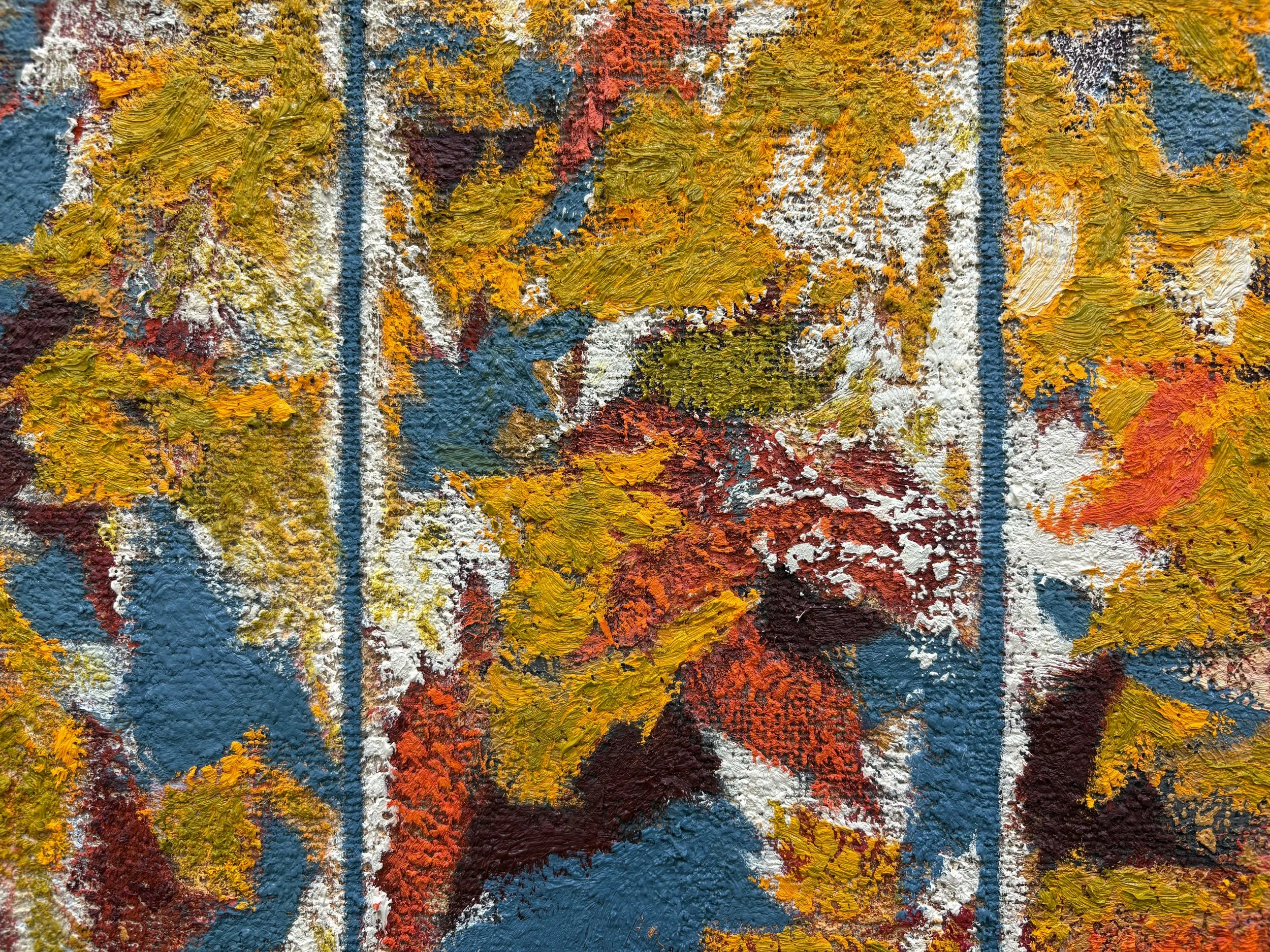
In Fence Paintings the frames became more important than I have experienced before. I think the project concerned itself a lot around the idea of weight, and things like space and spacing. The frame is containment vs expansion and image vs object, so to explore different solids and sizes seemed interesting and necessary as a way to clearly see the identity of each work.
The decision to paint one of the mahogany frames bone white was to mirror a colour centrally situated in the same painting and in that way contain the terracotta field around it, creating a rhythm through simultaneous contrast -- much like in the square paintings of Josef Albers.
The works shift a lot in colour from painting to painting. Are they made as a series, or one at a time?
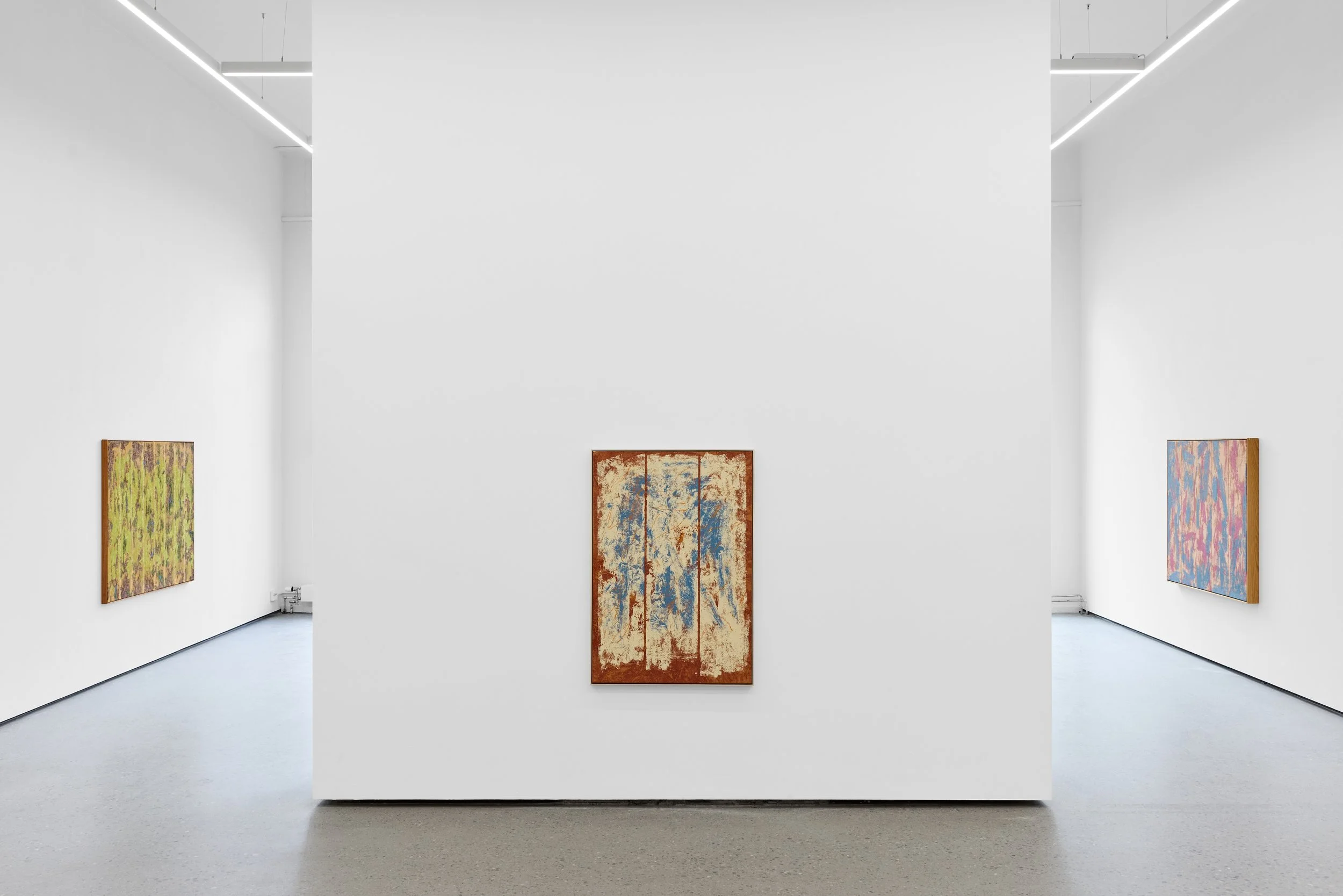
I worked on one painting for a long time. This painting became the key for starting the rest. After that I worked simultaneously on all of the paintings. I think in a dogmatic project like this, with much resting on the formal parameters, the colours play an important part. They work on perception through simultaneous contrast where the colours "lie" to the viewer through relativity. Colour feels to me as one of the most important parts of oil painting today, with the sensory power of pigment to evoke feelings in the same way music does.
Is there a painting by someone else you keep coming back to right now?
I always come back to Morandi, because I think he encompasses everything. It contains everything with simplicity. Lately though, and especially through making this exhibition, I have looked a lot at Arshile Gorky and especially his Dark Green Painting from 1948. There is something about the freedom and dancelike quality in his work that appeals to me, maybe because I have felt too rigid myself. There is also something interesting about Gorky painting and drawing from nature, but it is never an image of nature. It is more like a dance of forms, like an idea layered throughout a paper or canvas.
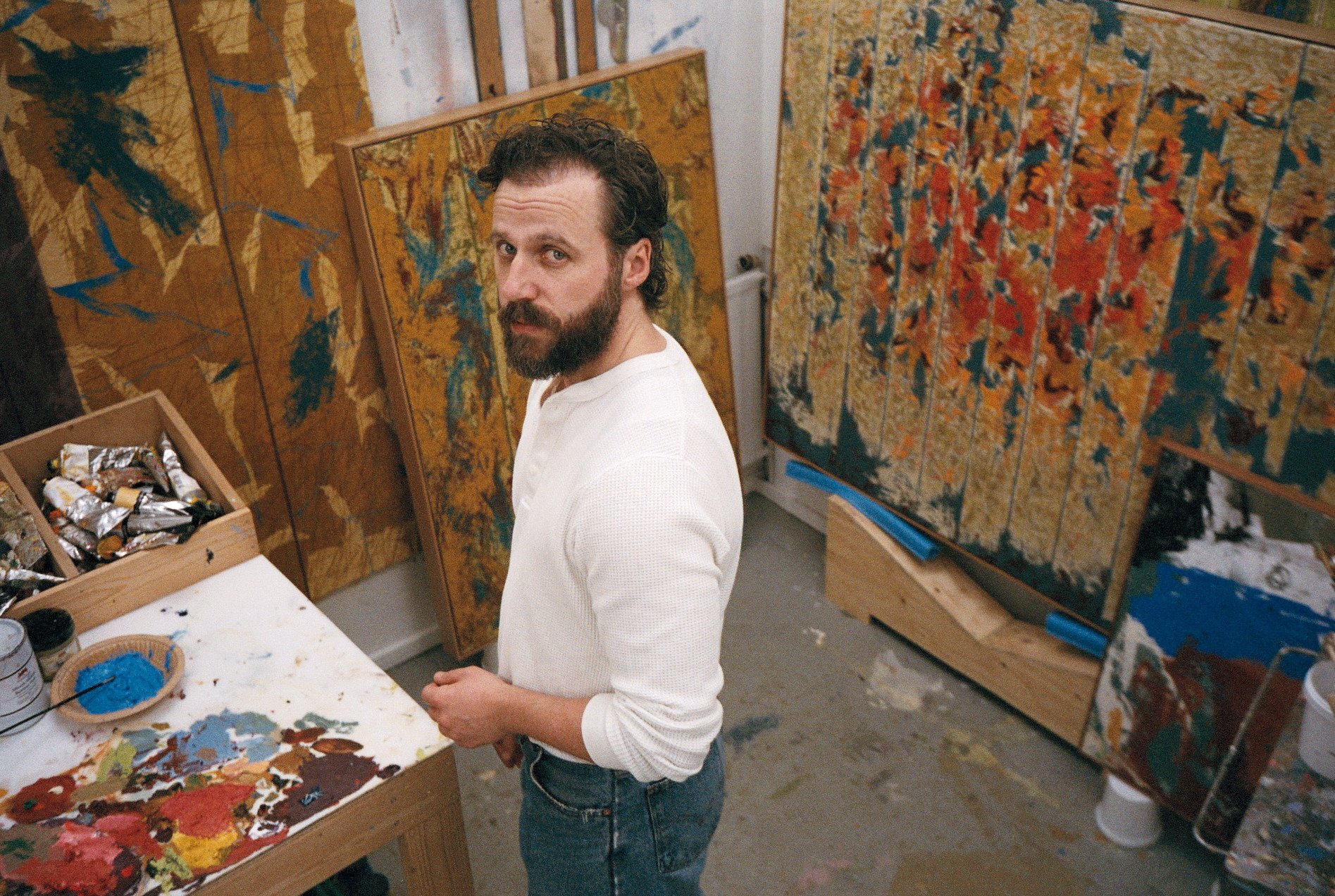
What does a painting look like when it is going wrong?
It looks nothing like what you imagined, and that is the problem -- to think about painting. You get frustrated and then the roads open up and a multitude of choices appear. At the same time this is when the painting happens or not, in the act of taking new choices and standing by them until they are in the bin or in a frame.
How do you know when one is finished?
I try not to overwork things, this is something I think I did heavily before. But in the end it is a question of what you are looking for. Is it harmony and closure? Or is it the opposite? I think the painting stops exactly where the artist is at that moment in time, and that is possibly why it can be hard to look back on your own work in certain periods.
